
How to Start with Data Science in 2020
Jan 25, 2025 · 4 min read
Originally published on Medium

As we round the decade into 2020, technology has transformed our world in unpredictable ways. To prepare our careers for what comes next, we need to adapt to new technologies and grow into new fields. Data science has become one of the most in-demand jobs of the 21st century; Harvard Business Review even called it "the sexiest job of the 21st century." Top companies want candidates who know data science because of the gains in efficiency and profit it brings. This post covers what data science is, why it's worth your time, how to get started and how it's changing. I hope it motivates you to begin your own adventure in data science.
Data science takes data and turns it into meaningful information that people use to make decisions and solve problems. It's multidisciplinary: it uses tools and techniques to manage data so you can find something new and meaningful in it. In other words, data science is a "concept to unify statistics, data analysis, and their related methods" in order to "understand and analyze actual phenomena" with data.1 It draws on mathematics, statistics, computer science, domain knowledge and information science.
So which skills matter most to a data scientist? The role requires:
- Strong knowledge of a programming language such as Python or R
- Hands-on experience with databases, such as SQL and MongoDB
- The ability to work with unstructured data from sources like video, voice and social media
- An understanding of analytical functions
- The ability to write machine learning programs
Let's go through the prerequisites.
Critical thinking
Understanding the problem is the first step. Without the ability to think through a problem logically, you won't be able to solve it. Critical thinking also helps you find new and more efficient ways to solve it.
Mathematics
Mathematics gives a data scientist a new lens for seeing patterns in a dataset, which makes it a required skill. Important topics include linear algebra, multivariable calculus, statistics and mathematical modeling.
Resources for mathematics
- Linear Algebra, Khan Academy
- Multivariate Calculus, Mathematics for Machine Learning
- Probability and Statistics
Programming
Programming is the bread and butter of data science. Gone are the days when a data scientist left building machine learning algorithms to AI engineers; the two jobs are now joined. A data scientist needs in-depth knowledge of at least one programming language, and Python and R are the most widely used. Focus on one language to start. I'd suggest Python because it's easy to learn. If you come from a mathematics background, R may be the better place to start before moving on to Python.
Resources for programming
Databases
A deep understanding of databases such as SQL and MongoDB is essential for extracting data and working with it. You can't work with data until you know how to store and clean it.
Resources for databases
- Choosing the Right Database
- Databases 101: Introduction to Databases for Data Scientists
- Databases and SQL for Data Science
- Getting Started with SQL: A Hands-On Approach for Beginners
Communication
Communication plays a vital role in data science. Once you've solved a problem, you have to share it with the company or your team, gather feedback, make changes and align with what the customer needs.
Data science, machine learning and deep learning
These courses cover the math and programming you need. From there, you can dive deep into data science, machine learning and deep learning.
Resources
- Python for Data Science
- Data Visualization in Python
- Machine Learning by Andrew Ng
- Hands-On Machine Learning with Scikit-Learn and TensorFlow by Aurélien Géron
- The Elements of Statistical Learning
- Deep Learning by Ian Goodfellow, Yoshua Bengio and Aaron Courville
Projects, competitions and trends
While learning, I always build projects on the subject I'm studying. Projects give you hands-on experience and a portfolio. Data science and machine learning are specialized fields, and many roles expect a master's degree. You can get a job without one, but you'll need a solid portfolio and an above-average grasp of the material. Keep up with what's trending, too: podcasts, blogs and meetups are full of what's happening in the industry, and many industry experts are happy to help newcomers.
Looking ahead
I hope this gives you a head start on data science: what it is, why it's worth learning, and resources to help you excel. Companies have shifted their view of data science from a profession to a skill, as employers demand more from these professionals. I believe data science is becoming part of the software engineering profession, as companies expect experience building end-to-end products. The data industry changed dramatically in the last decade, and it will keep changing as technology advances. Stay flexible and keep learning new technologies to stay relevant in this fast-moving field.
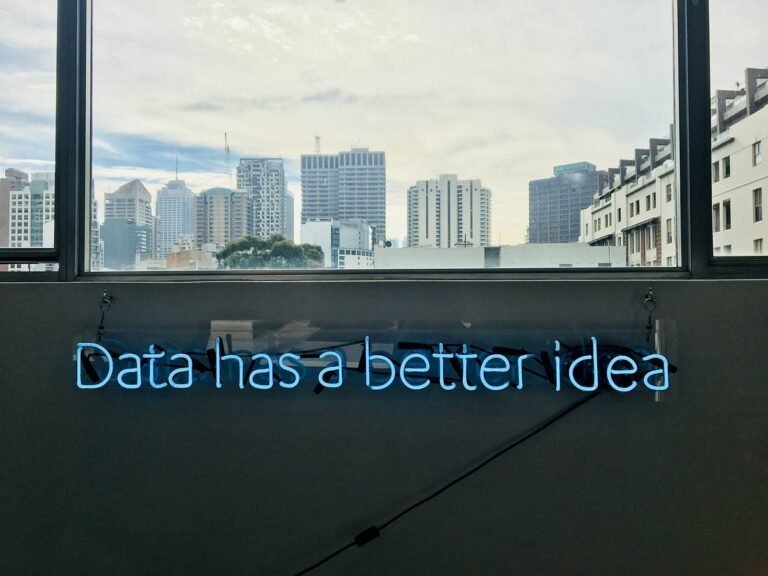
Photo by Franki Chamaki on Unsplash.
Footnotes
-
Hayashi, Chikio (1998). "What is Data Science? Fundamental Concepts and a Heuristic Example." In Data Science, Classification, and Related Methods, Springer Japan, pp. 40–51. doi:10.1007/978-4-431-65950-1_3 ↩