
What Will Your Plate Look Like in 2050?
Jan 25, 2025 · 5 min read
Originally published on Medium

It's a Sunday and, as usual, you make your way to the town square. No, you're not there to submit bureaucratic forms. The year is 2050, and you're waiting in line with everyone else for emergency food rations. The line seems endless, and if you're lucky you'll reach the front for your daily cup of rice and piece of bread before they run out. How did this happen? How did we get here? This scenario may seem far-fetched for developed countries, but for many developing countries it may be the reality. To understand the problem, we have to look at the past, and at why the global agricultural industry has failed to keep up with demand.
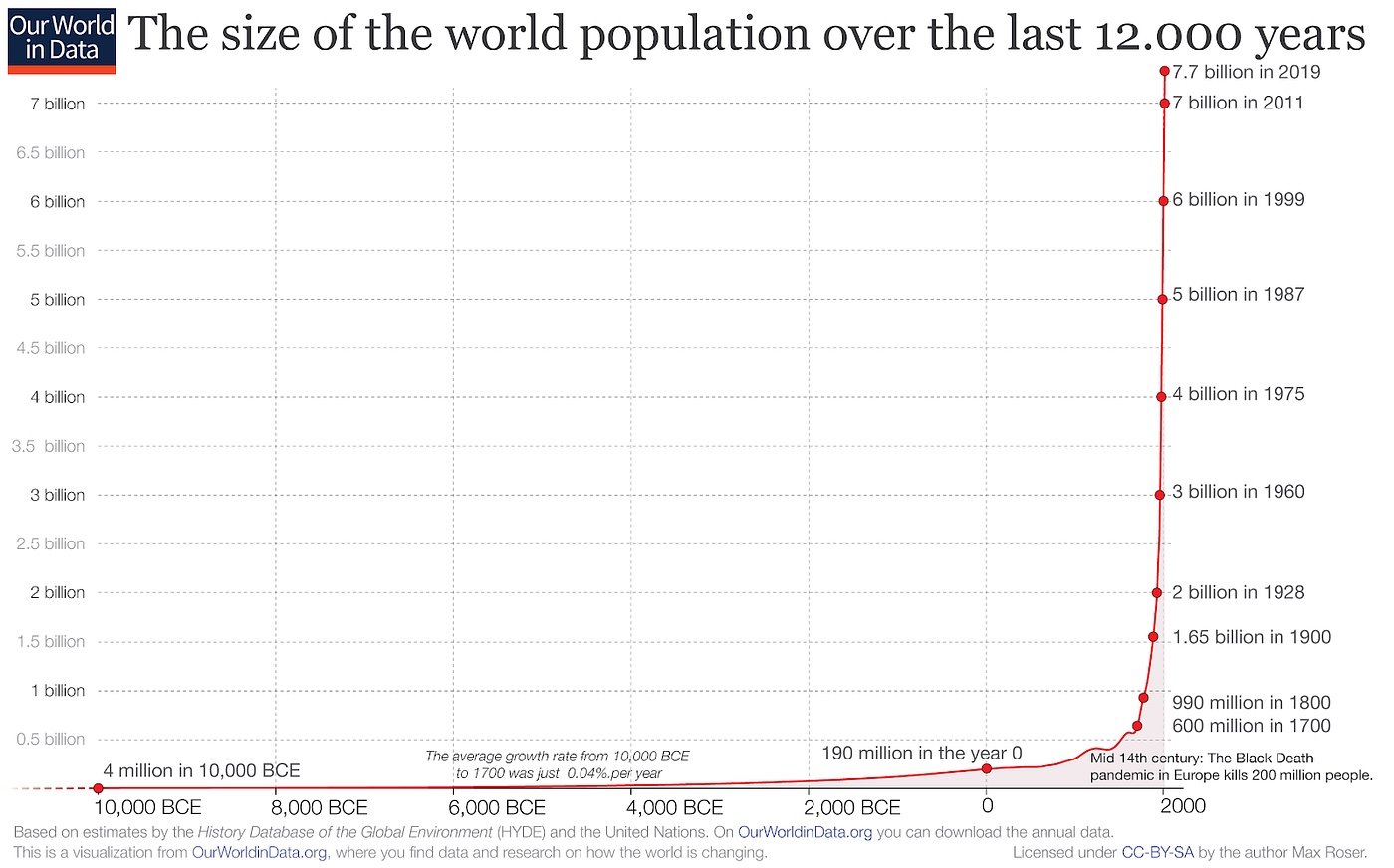
Food insecurity and starvation have existed on some scale throughout human history. Starting in 1900, though, the world's population grew roughly seven-fold. Growth like that was unprecedented, and it required crop production and yields to rise to meet demand. That didn't happen. According to foodaidfoundation.org, in 2018, 795 million people did not have enough food to live a healthy life, and they were concentrated in developing and poor countries. That raises the question: why are developing countries facing agricultural problems that developed countries, such as the US, are not?
Human population growth
One of the biggest agricultural issues in developing countries is rapid population growth. The world population was expected to reach about 8 billion around 2020, and with 795 million people already food insecure, things will only get worse. By 2050 it will reach 9.8 billion, according to UN estimates. If the share of people who are food insecure stays the same, 973 million people will go hungry. Populations come in two kinds: high-density (India, China) and low-density (US, Canada). High-density countries face smaller farms, pollution, greater demand for inorganic fertilizers, lower crop yields and lower farm incomes. For low-density countries, the main issue is finding enough arable land; Russia, for example, is low-density, but most of its land is not arable.
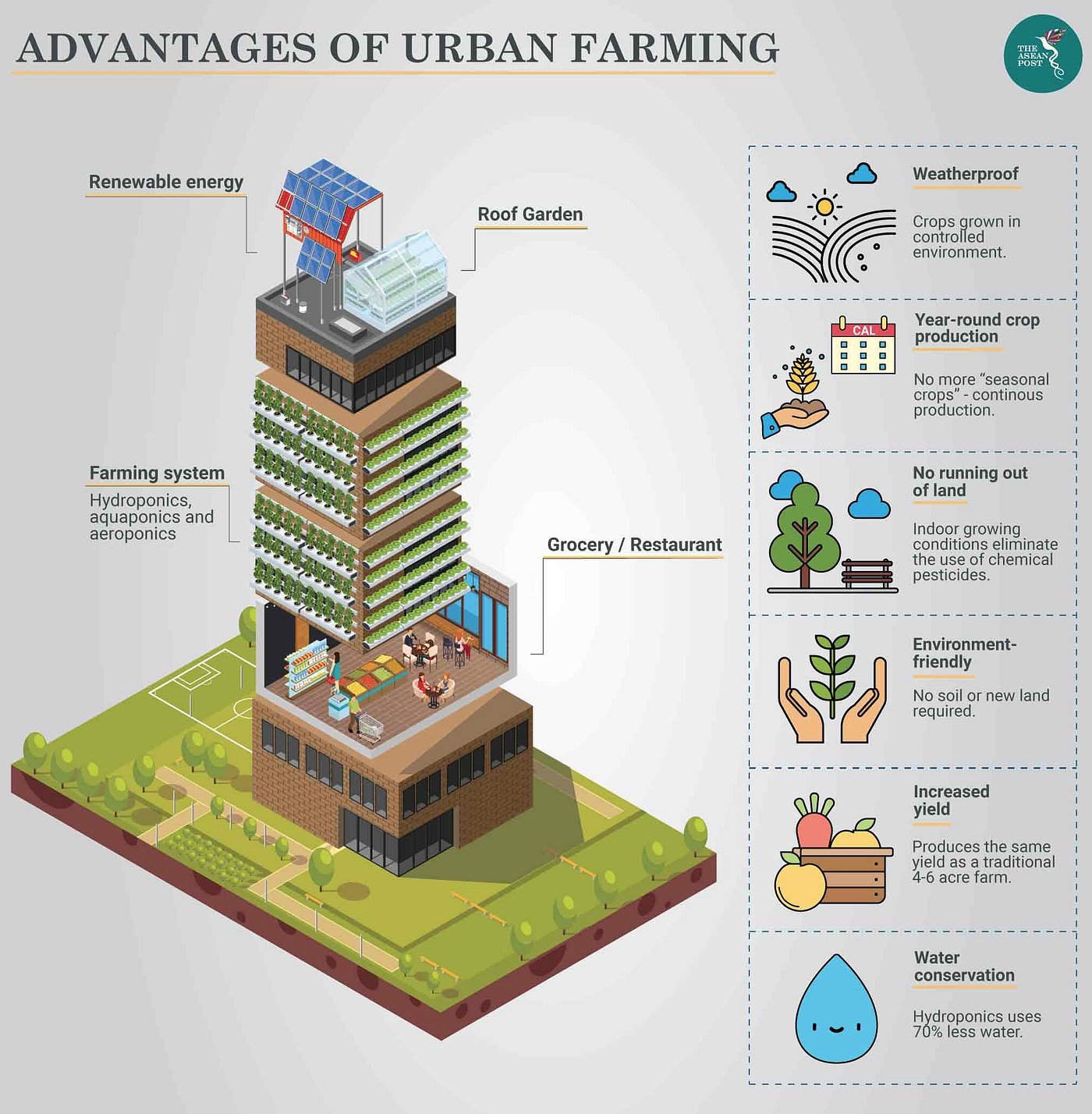
One potential solution is vertical farming. Vertical farming is a form of controlled-environment agriculture (CEA): a building in which each floor works as arable land. It increases the land we can farm and the types of crops we can grow. CEAs solve the major population problems farmers face, but they bring issues of their own. The main one is that they can't use natural resources such as rain and sunlight. To compensate, CEAs control the temperature, pump water and use artificial lighting, which takes a great deal of energy and money. A vertical farm costs about $39 million to build and $27 per square foot per year to operate. Those are significant obstacles, and they keep vertical farms from being built worldwide.
Pollution and climate change
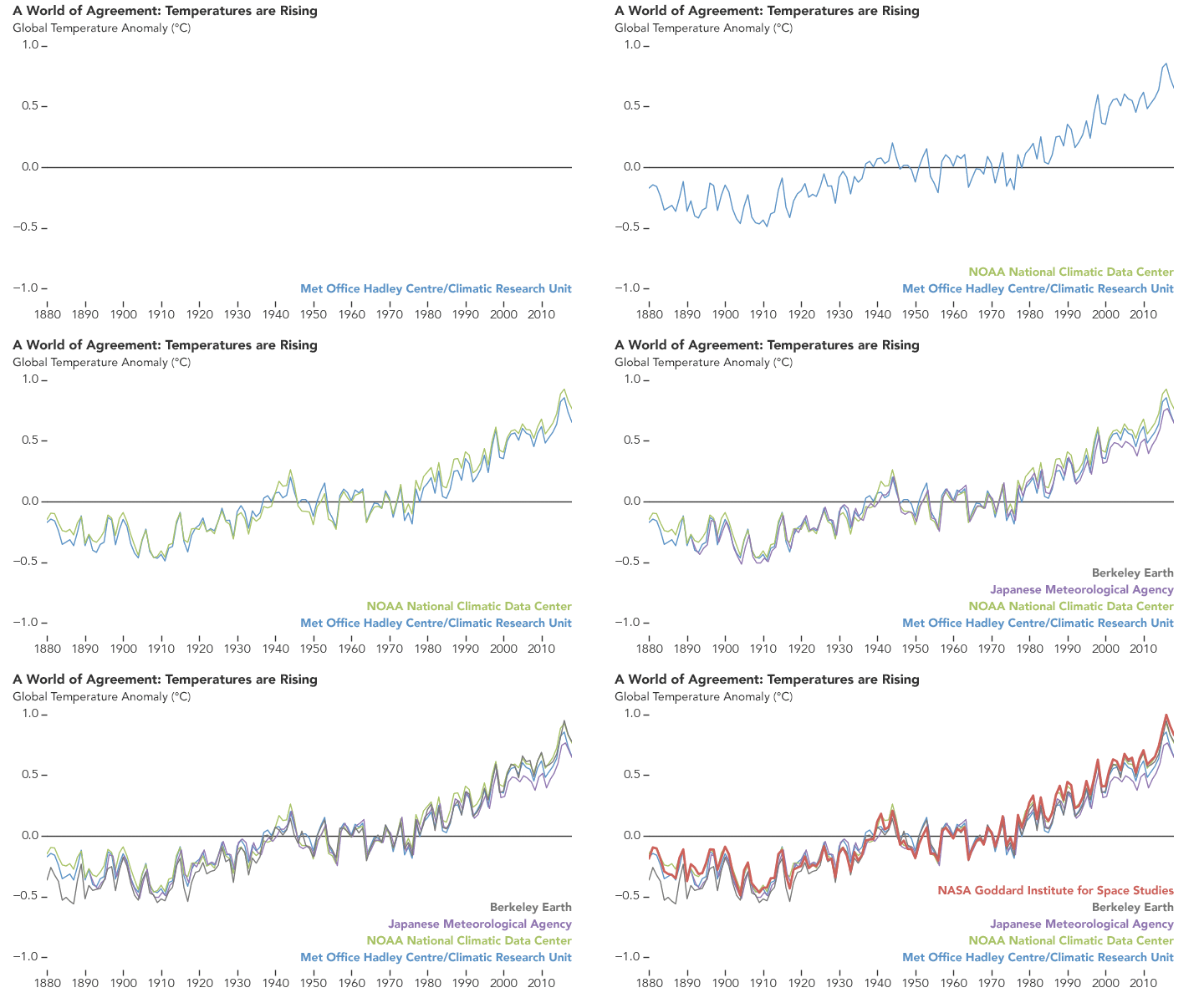
Another obstacle for agriculture is pollution and climate change. Because of them, we have to worry not only about the quantity of food we produce but about its quality too. Climate change causes soil degradation, which reduces crop yields: according to the USDA, land degradation, including soil erosion and desertification, lowers crop yields by 50%. Farmers test for soil degradation by sending soil samples to a lab, and the results take two to three weeks. In that time the soil composition can change and yields can drop.
There are two ways to fight soil degradation and the effects of climate change on yields. One is vertical farming, where soil and climate are both controlled, which effectively eliminates airborne pollution and soil erosion. The other is near real-time soil sensors, which let farmers respond to soil degradation much faster and so increase yields and productivity. Sensors are far cheaper than vertical farms, but they don't solve soil erosion.
Financing
In developed countries such as the US, financing is rarely the problem. American farmers have a strong support structure: federal loan programs, bank loans and subsidies. Thanks to these programs, even small farmers can use advanced equipment, technology and fertilizers to increase yields and improve quality, though more awareness of these programs is still needed. Developing countries have no such support structure, and farmers must fund themselves. The result is older equipment, less fertilizer, little training in new techniques and lower yields. In 2016, the average Indian farm produced about 1,700 pounds less per hectare than the global average. There are two ways to close the financing gap between developed and developing countries: governments can get more involved with subsidies and financing, or private groups can provide loans. Either way, the loans must come with education to make sure yields actually rise.
Back to 2050
It's a Sunday and, as usual, we're meeting at Starbucks for our pink drinks and chatting about current events. The year is 2050, but there are no food lines. No one is going hungry, the stock market is climbing and world productivity is rising. The actions we took in 2020 addressed the food crisis the world faced. That future is only possible if we address the problems facing the source of our food. Even developed countries will be significantly affected if developing countries such as India and China are held back by large, starving populations.
Sources: research notes.